
Dependency Injection for Testable, Flexible Code to cook up cleaner code.
From rigid recipes to adaptable kitchens: Master dependency injection for better code. Is your code a tangled mess of ingredients? Learn the secret to a well-organized kitchen with DI. 💉

Imagine you're a chef in a restaurant. You rely on ingredients like pork, beef, and onions, which can be sourced from different farmers or suppliers. Could you easily switch suppliers to get different quality ingredients? Or are you stuck with a single source, making changes difficult?
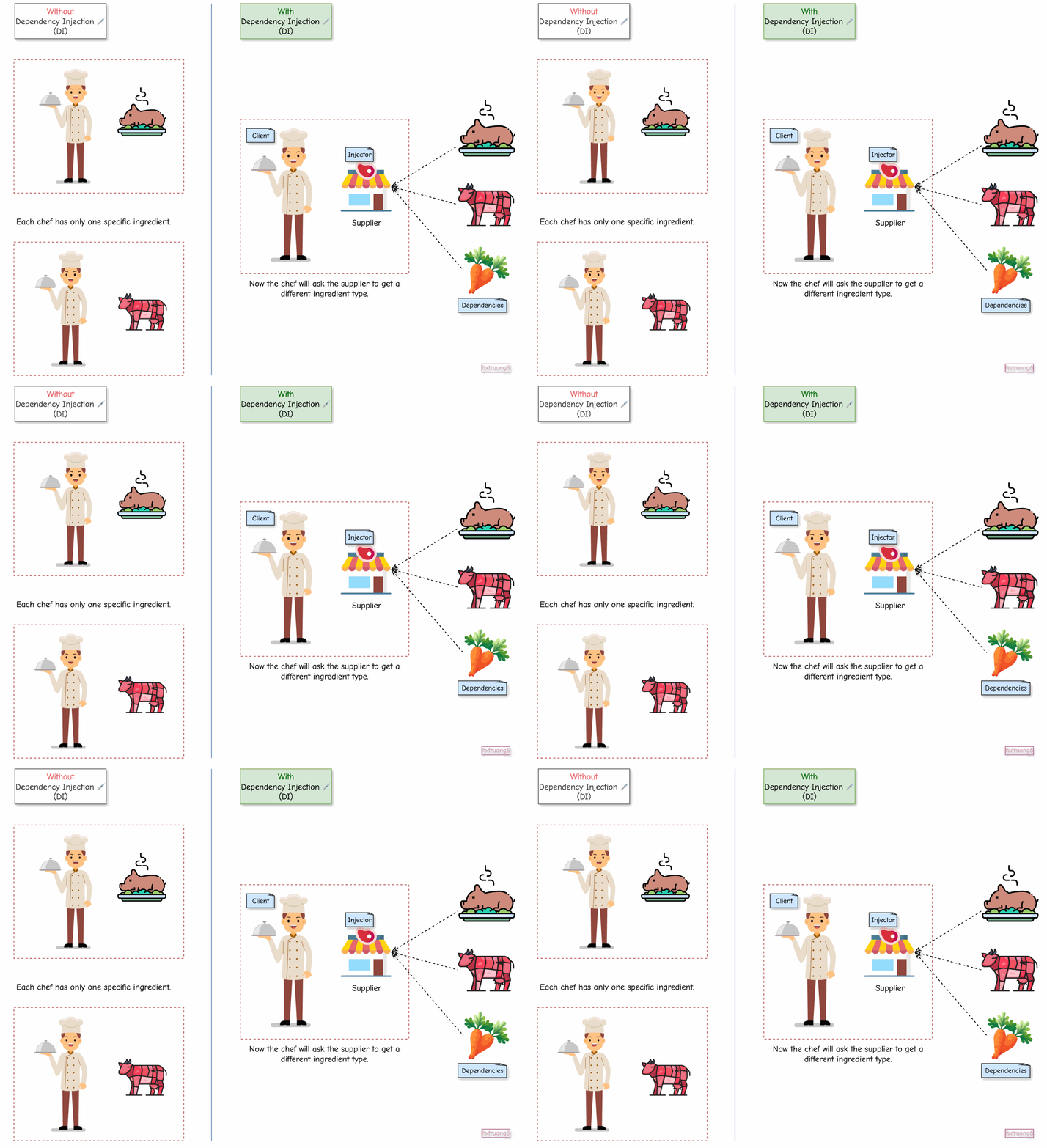
This same challenge exists in software architecture – across websites, mobile apps, servers, and games. Tightly coupled dependencies (like libraries, databases, or third-party services) can create problems. That's why we need design principles to achieve:
Loose Coupling: Minimize direct dependencies between components, making your code more adaptable.
Flexibility: Seamlessly swap components when needed, like switching database providers.
Improved Testability: Isolate components for testing by injecting mock or simulated dependencies.
Before diving deeper, let's nail down a software-focused definition:
What is Dependency Injection (DI)?
Dependency injection (DI) is a technique where a class receives its dependencies (the objects it needs to work) from outside itself, rather than creating them internally.
Core Components
Dependency: An object that another class relies on.
Injector: Handles object creation and manages how dependencies are provided to classes.
Client: The class that utilizes the injected dependencies.
Simple Example for Restaurant case
Let's look at our restaurant scenario:
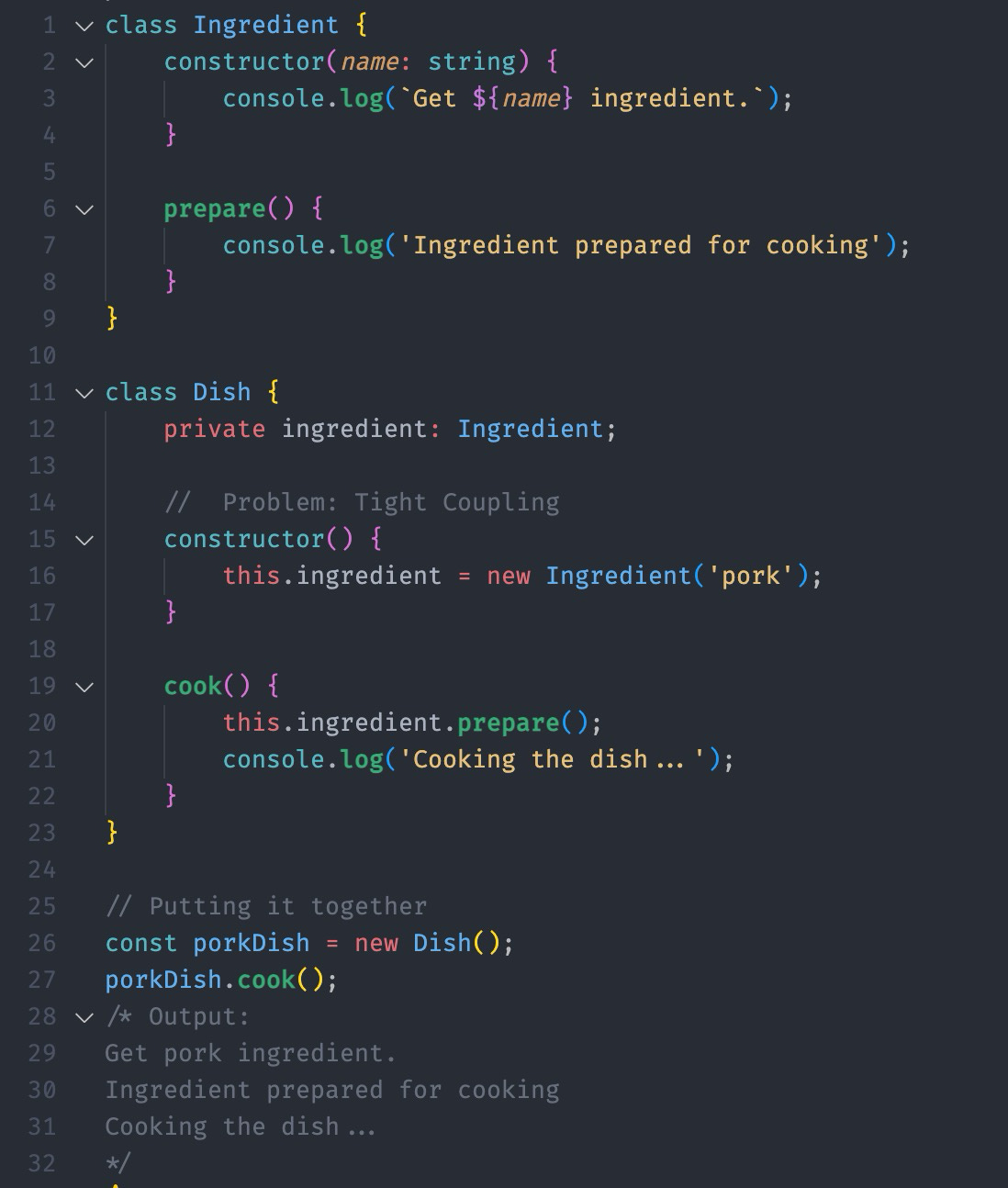
Problem: The Dish class directly creates an Ingredient, making it inflexible. It's hard to:
Test: Isolate
Dishfor testing without a specificIngredient.Change: Use a different type of
Ingredientwithout modifyingDish.
Dependency Injection Solution
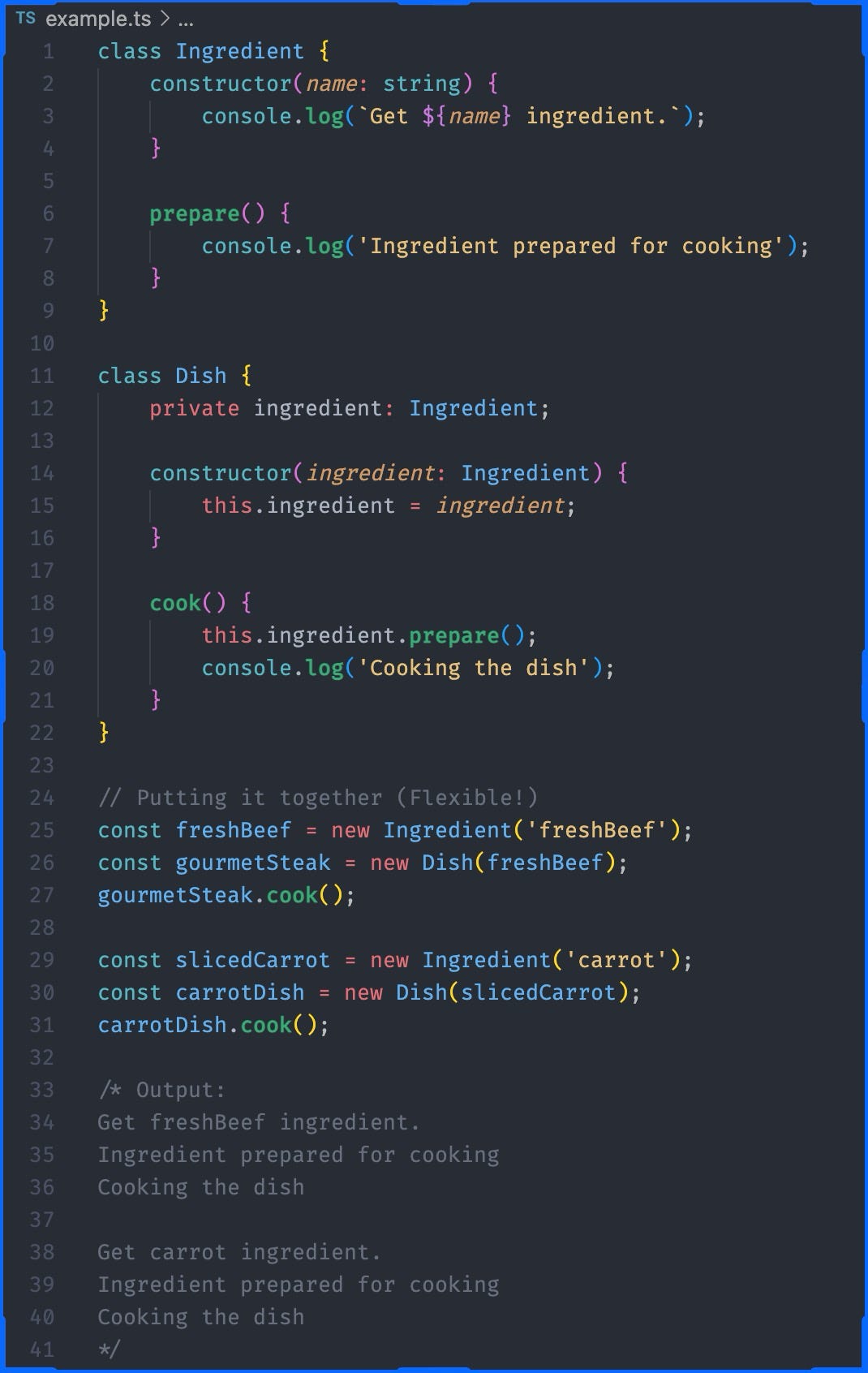
Now, Dish doesn't create the Ingredient. It's provided externally!
Chef as Client: The
Dishclass is the client of theIngredientdependency.Ingredients as Dependencies: Different
Ingredienttypes represent the dependencies.Suppliers as Injectors: Code elsewhere assembles the dish, acting as the injector.
Now, congrats 🥳! You've grasped the fundamentals of dependency injection!
Scenario: Fetching User Data
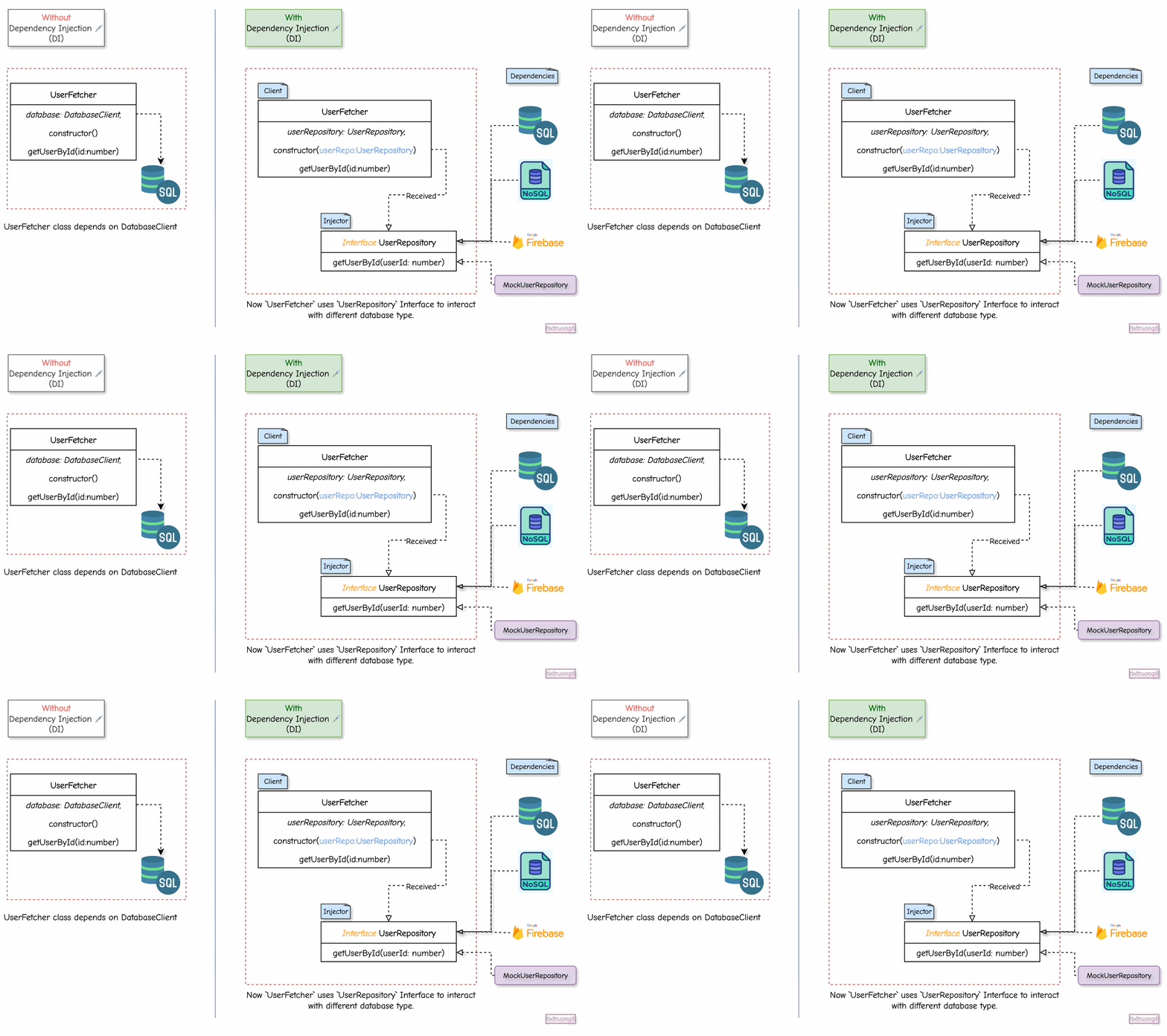
Think of your server as a restaurant kitchen. The UserFetcher is like a chef needing a key ingredient: user information. Let's see what happens if the chef tries to produce this ingredient themselves:
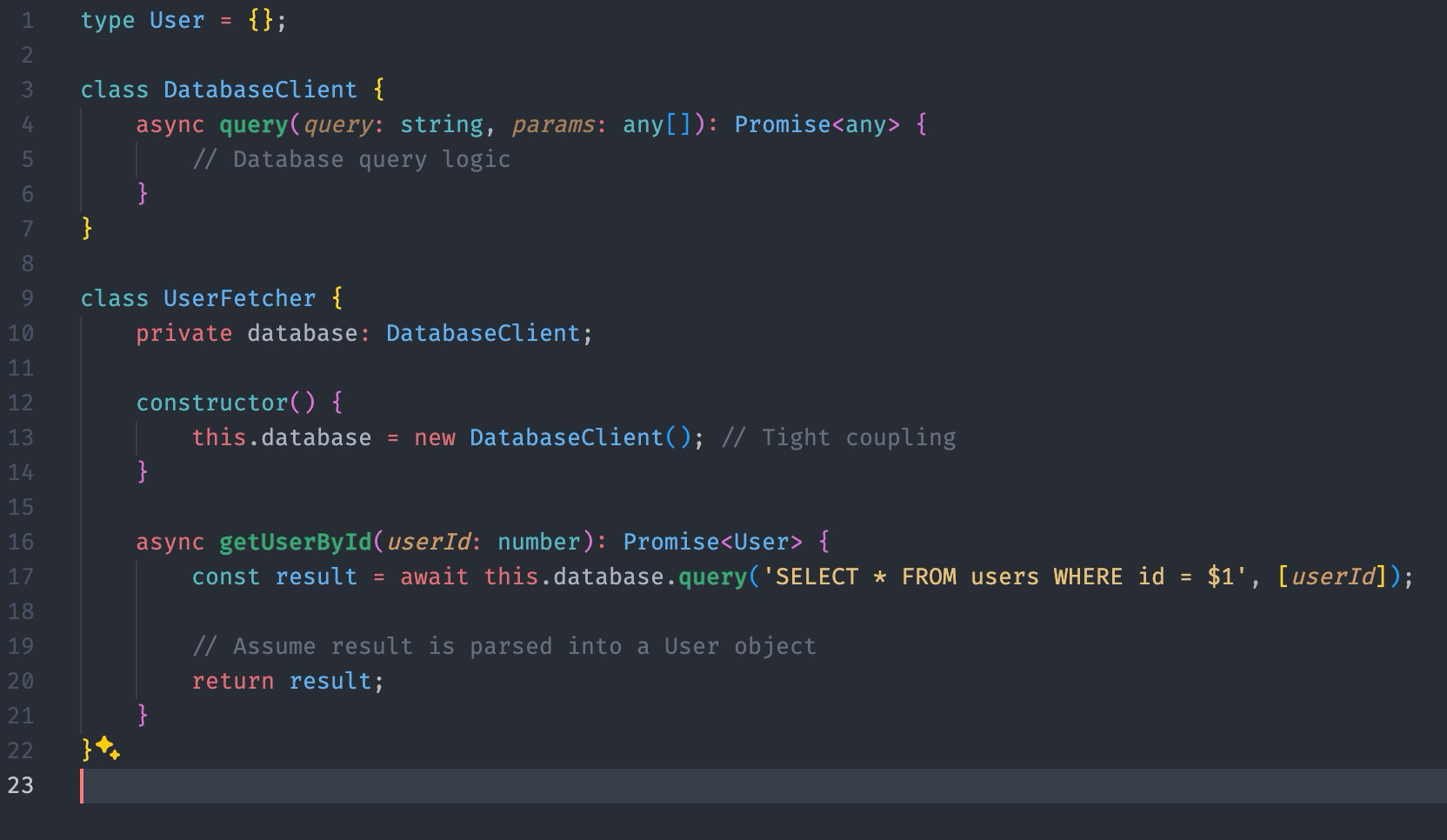
Problems:
Slow Cooking (Testing): To test any recipe (
UserFetcherfunctions), the chef needs a full database setup. This is slow and unreliable, just like real cooking!Stuck with One Farm (Flexibility): The chef is tied to a single database. What if they want to switch vegetable suppliers (database providers) or get pre-prepared ingredients (user data from a different source)?
Ordering Ingredients (Dependency Injection)
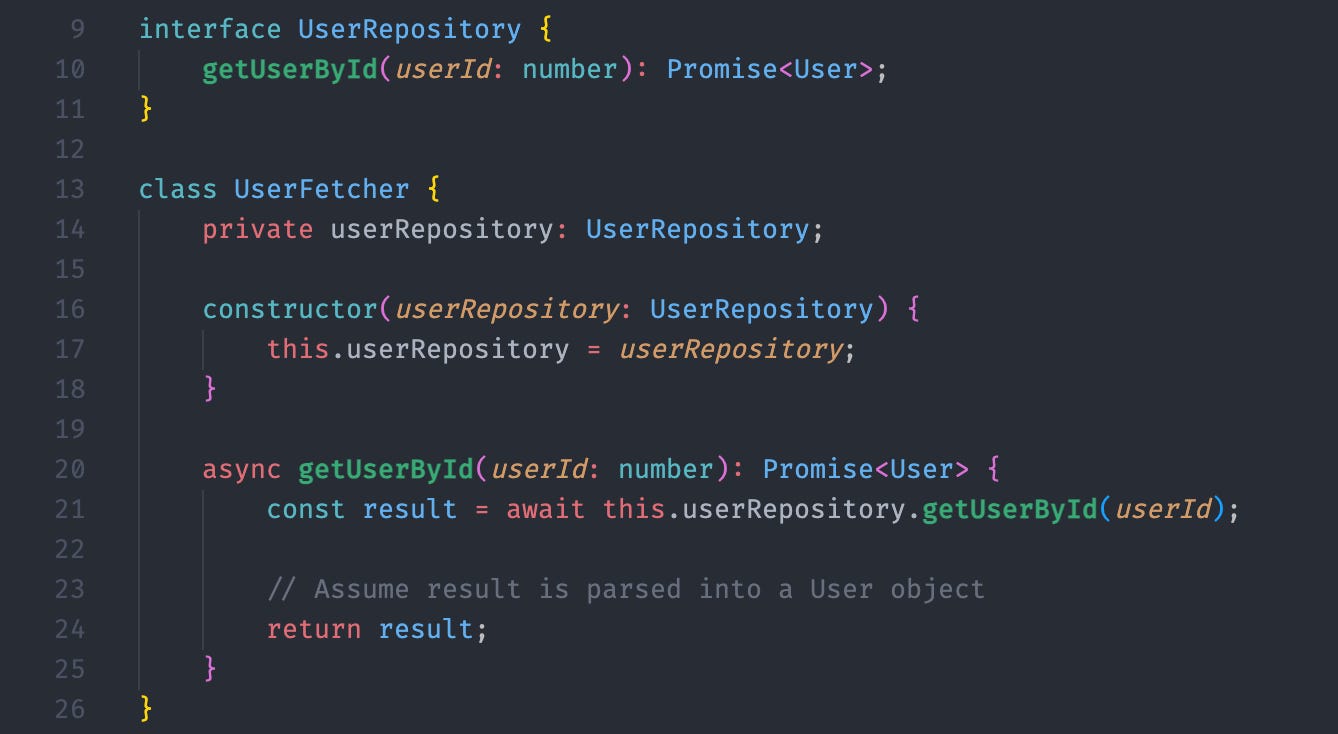
Now, the chef doesn't manage the database directly. They have suppliers (UserRepository)!
Benefits:
Faster Recipes (Testability): The chef can order "mock" ingredients (
MockUserRepository) for testing – no need for a whole farm!Changing Suppliers (Flexibility): Need user data from a file (
FileBasedUserRepository)? An external kitchen (APIUserRepository)? As long as they follow the order form (UserRepositoryinterface), the chef can work with them!

Key Takeaways: Focusing on what the chef needs (user data), not where it comes from, makes the kitchen more adaptable and recipes easier to test.
Restaurant Tie-In
Let's revisit our chef analogy. Imagine your UserFetcher is like a chef preparing a special dish that requires a key ingredient - user information.
Without DI: Your chef grows specific ingredient themselves. This limits menu choices and makes it hard to adapt if their demands increase.
With DI: Your chef has connections to various suppliers (
UserRepositoryimplementations). They can get the same ingredient (user data) from a database (DatabaseUserRepository), a file (FileBasedUserRepository), or even an external kitchen specializing in user data (APIUserRepository).
About DatabaseUserRepository Skeleton
Let's sketch out how the DatabaseUserRepository might work, keeping it simple:
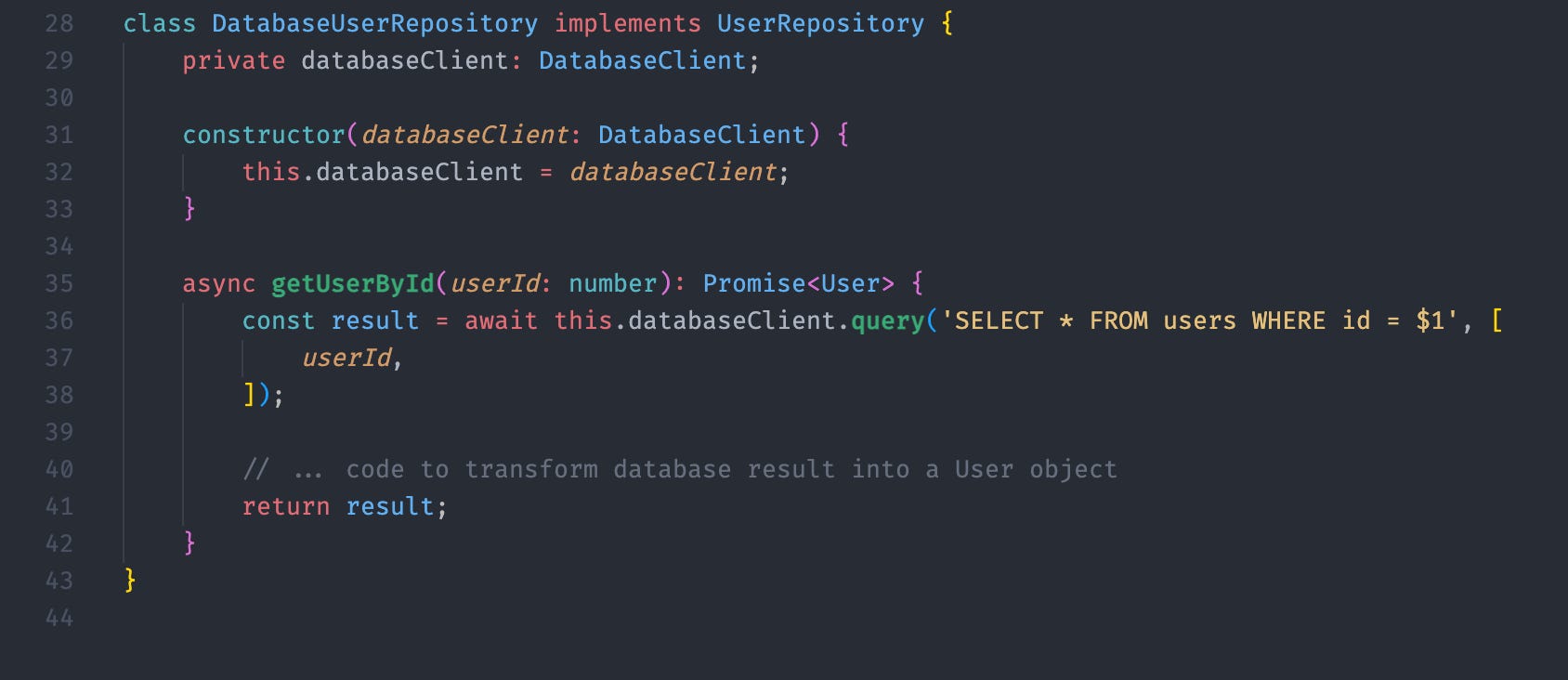
Key Points
Hidden Complexity: The
DatabaseUserRepositoryencapsulates the details of working with the database client. YourUserFetcherdoesn't care how the data is retrieved, just that it gets aUser.Real-World: In a real application, the database interaction would be more complex (error handling, connection management, etc.).
MockUserRepository
Imagine your MockUserRepository always delivers slightly overcooked vegetables. This lets you test how your recipe handles unexpected situations!
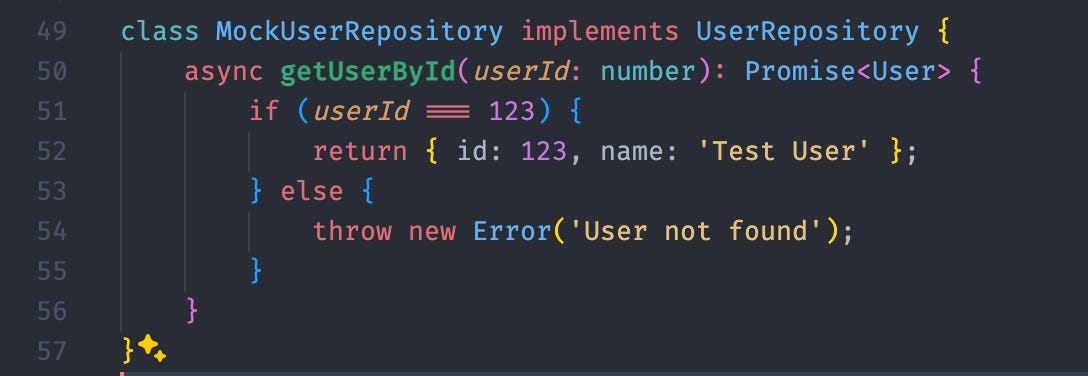
Recipe Testing Made Easy (Testability): Think of the
MockUserRepositoryas a "practice kitchen". Your chef (UserFetcher) can try out recipes with pre-made sample ingredients without needing a fully stocked pantry (real database).Changing Suppliers on the Fly (Flexibility): Need user data to come from a simple file (
FileBasedUserRepository)? A fancy online ingredient ordering service (APIUserRepository)? Your chef can swap suppliers seamlessly as long as they deliver what the recipe calls for (UserRepositoryinterface).
Use Cases of Dependency Injection
Flexible Recipes (Loose Coupling): Your chef can easily modify recipes or introduce new ones without needing to change their relationship with ingredient suppliers.
Changing Suppliers (Flexibility): Need to switch from a farm-fresh database (
DatabaseUserRepository) to a pre-processed data file (FileBasedUserRepository) due to a change in seasonality? No problem!Practice Kitchen (Improved Testability): Test recipes in isolation with your
MockUserRepository, ensuring they work perfectly before facing the rush of a real database.
Bigger Picture: Inversion of Control (IoC)
Dependency injection is like your head chef saying, "I don't care how I get my ingredients, as long as they meet my standards (UserRepository interface)." This frees the chef to focus on cooking!
Beyond DI: IoC can be seen in event-driven systems. Instead of the chef calling suppliers directly, they place orders, and get notified when ingredients arrive.
DI Frameworks (Like NestJS!)
Frameworks like NestJS act like a super-efficient kitchen manager:
IoC Containers: They track ingredients (dependencies) and know who needs what.
Decorators: Like writing orders on sticky notes – they tell the manager which ingredients go where.
Summary and Takeaway Keys
Dependency Injection: Making Your Kitchen Agile It's a technique that allows your chef (code components) to focus on their recipes, not managing the pantry. This leads to flexibility, adaptability, and smoother recipe testing.
Mindset Shift: Ingredients vs. Recipes Focus on defining what your components need (interfaces) rather than how they get it. This separates the core logic (recipes) from the details of ingredient sourcing (database, files, APIs).
Additional Benefits:
Maintainability: Changing an ingredient supplier (e.g., switching
DatabaseUserRepository) often requires minimal changes to your recipes.Collaboration: Different chefs (developers) can work on separate parts of the system as long as they agree on the "ingredient orders" (interfaces).